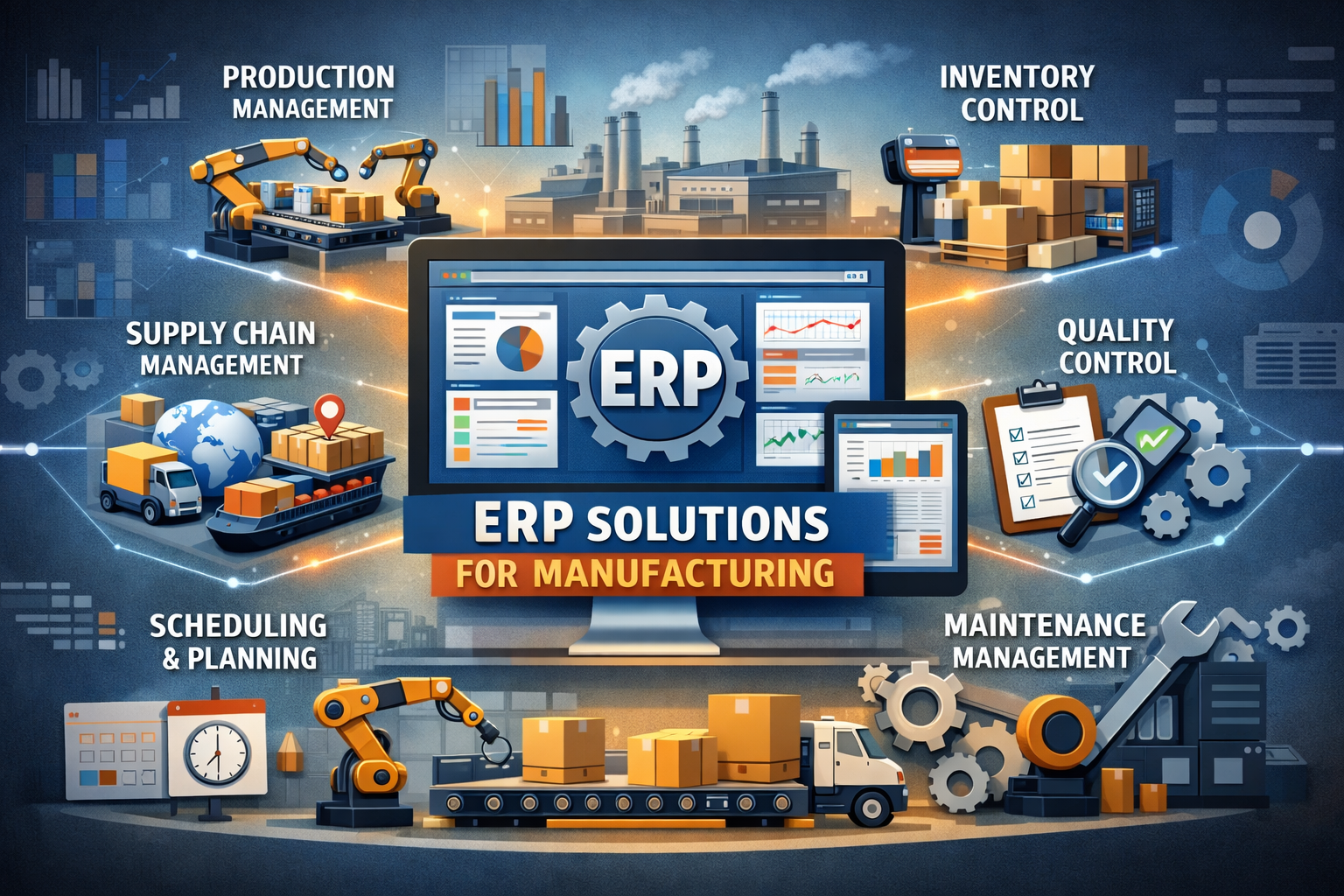
Based on our study and experience, we’ve analyzed a number of ERP Systems for the Manufacturing sector. We took into account the ability to manage complicated supply chain operations and shop floor automation, as well as scalability, maturity, total cost of ownership, and these factors.
Best for: Complex manufacturing and service-based operations
IFS Cloud combines ERP, asset management, and service management in a single platform. It is ideal for manufacturers in industries such as aerospace, defense, and industrial equipment.
Key features:
Best for: Small to mid-sized manufacturers seeking cloud ERP
Oracle NetSuite is a cloud-native ERP solution offering strong financial management, inventory control, and order management capabilities. It is particularly well-suited for fast-growing manufacturers and multi-location businesses.
Key features:
Best for: Small to mid-sized manufacturers seeking cloud ERP
Oracle NetSuite is a cloud-native ERP solution offering strong financial management, inventory control, and order management capabilities. It is particularly well-suited for fast-growing manufacturers and multi-location businesses.
Key features:
Best for: Large and enterprise manufacturers
SAP S/4HANA is a next-generation ERP platform designed for complex, global manufacturing operations. Built on SAP’s in-memory database, it enables real-time analytics, advanced production planning, and end-to-end supply chain visibility.
Key features:
Best for: Manufacturing-centric operations
Infor CloudSuite Industrial is designed specifically for manufacturers, offering deep industry functionality for discrete and process manufacturing.
Key features:
Best for: Manufacturers using Microsoft tools
Microsoft Dynamics 365 combines ERP and CRM functionality into one ecosystem. It offers AI-driven insights, seamless integration with Microsoft 365, and flexible modules for manufacturing, warehousing, and finance.
Key features:
Best for: Growing manufacturers with budget flexibility
Acumatica is a modern cloud ERP known for its flexible, consumption-based pricing model. It offers strong core manufacturing features without per-user licensing constraints.
Key features:
Best for: Small manufacturers and startups
Odoo is an open-source ERP platform offering a wide range of modular applications. Its flexibility and affordability make it a popular choice for small and growing manufacturers.
Key features:
Best for: Discrete and process manufacturers
SYSPRO offers a flexible ERP solution tailored to manufacturing and distribution businesses. It supports both cloud and on-premises deployments.
Key features:
Best for: Small and mid-sized manufacturing companies
SAP Business One is a streamlined ERP solution designed for growing businesses that want SAP’s reliability without enterprise-level complexity.
Key features:
When selecting an ERP system, manufacturers should consider:
Company size and growth plans
Manufacturing type (discrete, process, or mixed)
Deployment preference (cloud, on-premises, or hybrid)
Industry-specific requirements
Total cost of ownership
A well-chosen ERP system not only improves efficiency but also provides the foundation for digital transformation and long-term competitiveness.
Also read, Top 10 CRM for Small Business